
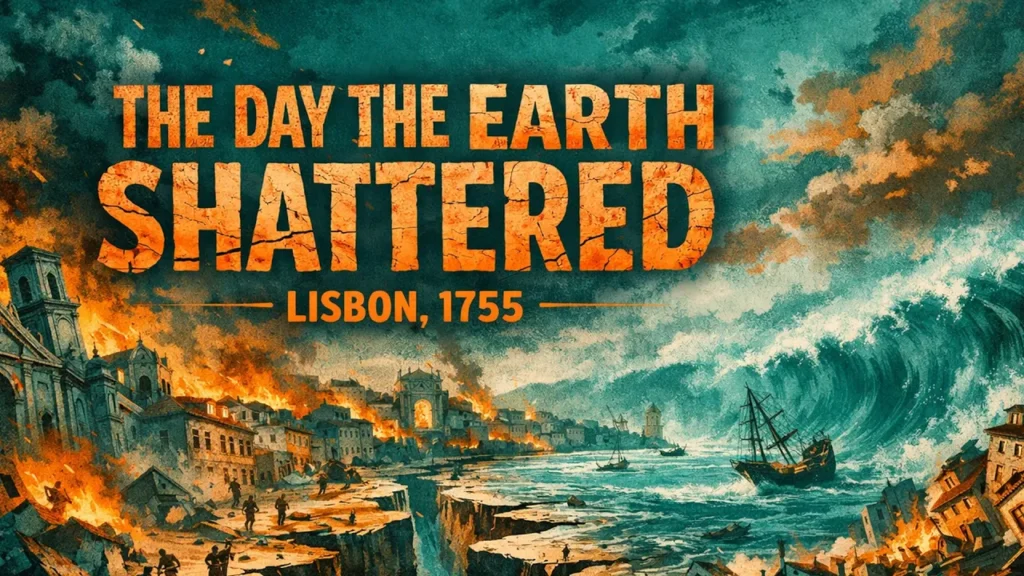
The Day the Earth Shattered: The 1755 Lisbon Earthquake | A Deep Sleep Story of Destruction & Resilience
Experience one of history’s most profound turning points with “The Day The Earth Shattered,” an immersive 1-hour and 39-minute narrative about the Great Lisbon Earthquake of 1755.
On the morning of November 1st, 1755—All Saints’ Day—the earth beneath Lisbon, Portugal, didn’t just shake; it ruptured. This meticulously researched sleep story takes you back to a time when Lisbon was the glittering, gold-filled capital of a global empire, only to be brought to its knees by a triple catastrophe: a massive earthquake, a devastating tsunami, and a five-day firestorm. Whether you are looking for a deep dive into European history or a soothing voice to help you drift into sleep, this video offers a unique blend of education and relaxation.
The Triple Catastrophe of 1755
The disaster began at approximately 9:40 AM, just as the city’s faithful were gathered in magnificent stone cathedrals [07:39]. Within minutes, the fourth largest city in Europe was a landscape of ruins. But the nightmare was only beginning. The earthquake triggered a colossal tsunami that swept through the waterfront [25:46], followed by an unstoppable conflagration that liquefied stone and erased centuries of records and wealth [35:57].
Why This Sleep Story is Unique:
-
Atmospheric Historical Detail: Relive the sights and sounds of 18th-century Lisbon—from the scent of incense in the Carmo Convent [03:53] to the roar of the returning Tagus River.
-
Philosophical Exploration: Discover how this single event shook the foundations of the Enlightenment, prompting thinkers like Voltaire, Rousseau, and Kant to question the nature of God and the universe [47:14].
-
The Birth of Seismology: Learn how the Marquis of Pombal’s rational response to the disaster led to the world’s first earthquake-resistant building techniques—the “Pombaline Cage” [01:04:14].
-
Calm, Rhythmic Narration: The storyteller’s voice is designed to lower your heart rate, guiding you through the tragedy toward a sense of human resilience and peace.
Key Chapters in the Narrative:
-
[00:00] Part One: All Saints’ Morning: The deceptive peace of a holy day in a city drunk on Brazilian gold.
-
[09:24] The Earth Begins to Dance: The terrifying three to six minutes that dismantled Lisbon’s architectural splendor.
-
[15:04] Part Two: The Three Horsemen: How earthquake, fire, and flood combined to create a “vision of hell.”
-
[24:25] The Tsunami Strikes: The science of the Atlantic rupture and the wall of water that engulfed the Praça do Comércio.
-
[35:21] Part Three: The Fires of Judgment: The five-day firestorm and the pragmatic rise of the Marquis of Pombal.
-
[54:13] The Toll of Loss: Estimating the 30,000 to 50,000 lives lost and the erasure of entire lineages.
-
[01:16:19] Part Five: Tremors Through Time: The long road to reconstruction and the lasting philosophical scars on the European mind.
Perfect For:
-
Insomnia Relief: Letting a detailed historical epic quieten your mind and guide you into a restful night.
-
History Students: A comprehensive look at 18th-century Portugal and the seismic shift in Enlightenment philosophy.
-
Architecture & Science Lovers: Understanding the origins of urban planning and seismic engineering.
Lisbon rose from its ashes, not as it was, but more rational and resilient. Join us as we explore the silence and the shouting of a day that changed the world forever [01:39:29].
Engage with the History: 🔔 Subscribe to Bedtimes Stories to Asleep for more immersive historical journeys. 💬 Comment: Do you think we are better prepared for such a “triple catastrophe” today? 👍 Like this video if you appreciate calm, thoroughly researched historical content.
Watch the official video here: The Day The Earth Shattered – Lisbon 1755
From the video description…
The morning of November 1, 1755, began as a day of solemn celebration in Lisbon. It was All Saints’ Day (“Dia de Todos os Santos”), and the glittering capital of the Portuguese Empire was filled with the aroma of fresh bread and the sounds of the faithful gathering in cathedrals to pray for the dead. From the narrow, cobbled streets of the Alfama district to the grand Ribeira Palace, the city was a tapestry of colonial wealth and baroque beauty, home to upwards of 275,000 people.
At approximately 9:30 AM, the peace was shattered by a low, deep rumble that grew into a massive earthquake, now estimated at a magnitude of 8.5 to 9.0. For several terrifying minutes, the earth shook with such force that massive stone structures—including the Gothic Carmo Convent—collapsed, crushing thousands of worshippers. The destruction was threefold: following the tremors, a tsunami described as a “vertical green-black wall” of water and debris surged from the Tagus River, engulfing those who had fled to the waterfront for safety. Simultaneously, thousands of fallen oil lamps ignited a firestorm that razed what remained of the city’s center.
The disaster claimed or displaced an estimated 180,000 people. However, the ruins of Lisbon also became the cradle of the Enlightenment. While traditionalists viewed the event as divine wrath, the Marquis of Pombal took a pragmatic approach, famously asking, “What now? We bury the dead and heal the living”. His subsequent reconstruction of the Baixa district utilized innovative, earthquake-resistant “wooden cage” designs, marking a transition toward modern urban planning and the birth of seismology. Lisbon’s tragedy forced Europe to rethink the relationship between nature, science, and the divine.
#Lisbon1755 #GreatLisbonEarthquake #History #Enlightenment #MarquessOfPombal #Seismology #PortugueseHistory #NaturalDisasters #UrbanResilience #Alfama #Voltaire #EuropeanHistory